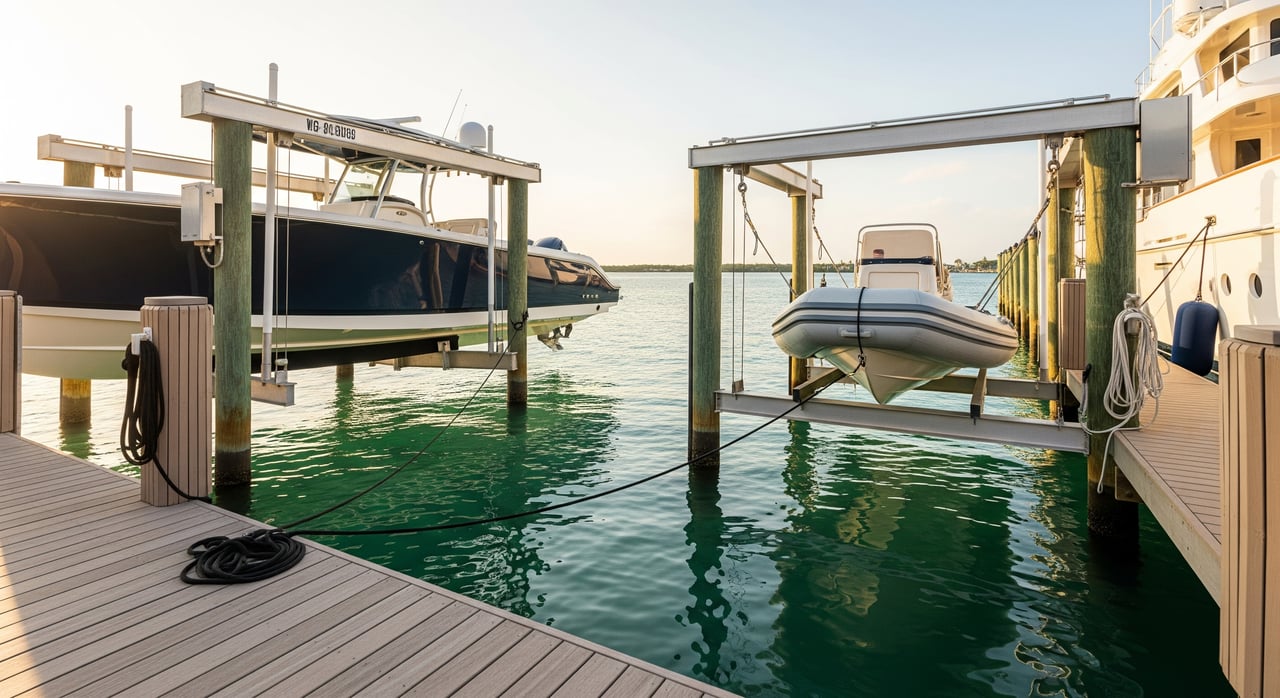
Eyeing a canal-front home in Islamorada and wondering how you will store your boat? Choosing between a boat lift, davits, or a wet slip is a big decision that affects convenience, maintenance, storm planning, and cost. You want something that fits your vessel, your routine, and the realities of Keys permitting. This guide walks you through each option, tailored to 33036 conditions, so you can buy with confidence. Let’s dive in.
Quick comparison for 33036
- Boat lift: Best all-around for 18–40 ft boats when your seawall and depth allow it. Keeps the hull out of saltwater and speeds up daily use. Expect higher upfront cost and permits.
- Davits: Lower-cost, smaller footprint for tenders, skiffs, and small bay boats. Great where the water is shallow near the dock. Limited by weight and mounting strength.
- Wet slip: Simplest for larger vessels or when a lift is not feasible. More ongoing hull maintenance and storm prep. Marina amenities can be a plus.
Boat lifts: pros, cons, and costs
Boat lifts are fixed or floating mechanisms that raise your boat out of the water and hold it on a cradle or platform.
Pros
- Keeps the hull out of saltwater, which reduces marine growth, corrosion, and cleaning time.
- Faster daily access than hauling to land, ideal for frequent use.
- Works for many sizes, from small runabouts to larger center consoles.
Cons
- Significant installation and permitting. You need a suitable seawall or pilings and power.
- Depth at low tide must support the lift and your boat’s draft.
- Exposure to storm surge and wind. Not storm-proof without a plan to remove or relocate the boat.
- Possible shading or habitat impacts that trigger environmental review.
Best fit
- Boats about 18–40 ft, depending on capacity and design.
- Owners who want quick launch and retrieval and do not mind mechanical upkeep.
Typical costs
- Small residential lifts often land in the lower five figures installed.
- Larger capacity or hydraulic systems can reach the mid to high five figures or more.
- Final pricing depends on capacity, pilings, electrical, and permits.
Keys-specific notes
- Older concrete seawalls or riprap may not be engineered for lift loads. A structural review is smart.
- Seagrass shading and new pilings can require environmental permits. Expect coordination with county and state agencies.
- Verify electrical service at the dock and allowable conduit runs before you buy.
Davits: pros, cons, and costs
Davits are hoists or crane arms mounted to a seawall, dock, or piling that lift and suspend a small boat or swing it ashore.
Pros
- Lower cost and smaller footprint than full lifts.
- Ideal for tenders, skiffs, and small bay boats where you want to keep the hull dry.
- Practical in shallow water since the boat hangs clear of the water.
- Easier to remove or stow hardware ahead of storms.
Cons
- Capacity is limited. Not appropriate for larger or heavy boats.
- Requires proper rating for your boat’s weight and good sling or chain maintenance.
- Needs strong mounting points and safe swing clearance.
Best fit
- Tenders, skiffs, flats boats, and small bay boats, typically up to roughly 14–20 ft depending on weight rating.
Typical costs
- Manual davits for small tenders can be in the low to mid three figures to low four figures.
- Heavy-duty, powered systems often run mid to high four figures, plus installation and any structural reinforcement.
Keys-specific notes
- Confirm your seawall can take the load. Some bulkheads need reinforcement.
- Check overhead and side setbacks so the boat can swing safely onto the dock.
Wet slips: pros, cons, and costs
A wet slip keeps your boat in the water at a dock or marina when not in use.
Pros
- Lowest upfront cost for the property owner. At marinas you pay slip fees instead of installing equipment.
- No heavy structures on your seawall. Useful where depth or structure does not allow a lift.
- Practical for larger boats and cruisers.
- Marinas may offer power, fuel, pump-out, and haul-out services.
Cons
- Continuous immersion increases hull growth and corrosion, so you will clean more often and maintain antifouling.
- More exposure to debris and surge during storms. Strong storm plans are essential.
- Slip availability and pricing vary. Private slips at homes can be limited by depth and space.
Best fit
- Larger vessels that are impractical or too heavy for residential lifts.
- Owners who value marina services and accept ongoing hull care.
Typical costs
- In the Keys, marina slip rentals range widely from the low hundreds to over a thousand dollars per month depending on size, location, and services. Local quotes are essential.
Keys rules and permitting
Who approves what
- Monroe County Building Department: permits and inspections for docks, seawalls, and lifts.
- Florida Department of Environmental Protection: oversight for structures on submerged lands, seagrass shading, new pilings, and dredging.
- U.S. Army Corps of Engineers: potential jurisdiction for dredging or work in navigable waters.
- Florida Fish and Wildlife and local environmental regulators: guidance on marine life protections.
- FEMA and local floodplain rules: coastal construction and elevation standards in flood zones.
- HOAs or condo associations: many developments limit dock equipment or modifications.
Environmental limits to expect
- Seagrass protection and shading rules shape dock and lift design.
- Dredging is tightly controlled and often not allowed near sensitive habitat.
- Pilings may be limited in number and placement.
- Tidal range matters. Verify mean low water depths and controlling depths for safe access.
Green Turtle Beach realities
- Many seawalls are older concrete bulkheads. Do not assume they can carry lift brackets without engineering.
- Lot setbacks and dock-length limits can restrict finger piers or davit placement.
- Lifts need power. Confirm capacity and permitted dockside wiring.
Hurricanes, insurance, and upkeep
Storm planning in Islamorada
- Lifts protect against daily immersion but are not storm-proof. Many owners remove the boat and haul inland or to a professional haul-out before major storms.
- Davit boats are often lighter and easier to trailer inland when a storm approaches.
- Boats in wet slips need a plan to move to protected waters, haul out, or secure with heavy hurricane lines. Some marinas offer haul-out services.
Insurance and liability
- Insurers may require specific storm actions, such as moving ashore or using hurricane ties.
- New lifts or davits can affect policies. Certified installation and adherence to manufacturer specs may be required.
- If using a marina, understand its storm policies and liability coverage.
Maintenance expectations
- Saltwater corrodes metal and electrical components. Plan for regular inspection, anode replacement, and cable and motor service.
- Wet-slipped boats need consistent bottom cleaning and antifouling. Boats on lifts still need attention to running gear.
- Factor annual maintenance, service contracts, and electric costs into your life-cycle budget.
Match your boat and use
- Flats or skiff, 12–18 ft: Davits or a small lift. Easy to remove for hurricanes.
- Bay or center console, 18–28 ft: Small to mid-capacity lift if structure allows. Wet slip if you cruise longer distances or exceed lift ratings.
- Dual-console or express cruiser, 28–40+ ft: Large lift if engineering and depth support it, or a wet slip or marina setup.
- Yachts over 40 ft: Most owners rely on wet slips and professional haul-out facilities.
Buyer dock inspection checklist
- Water depth at mean low water and extreme low tides. Confirm channel access for your draft.
- Seawall type and condition. Look for engineering reports or recent repairs.
- Existing permits and as-built records for docks, lifts, or davits.
- Dockside power availability, amperage, and permitted, marine-grade wiring.
- Overhead clearance and swing radius for davits or cranes.
- Setbacks, HOA or condo rules that limit equipment type or size.
- Hurricane plan, including nearby haul-out facilities and timing.
- Maintenance logs for lifts or davits, including cable and motor replacements and warranties.
- Signs of environmental issues such as seagrass scarring or past dredging violations.
- Insurance requirements tied to lifts, davits, or marina storage.
Local resources and next steps
When you are serious about a property, line up conversations with the Monroe County Building Department and the Florida Department of Environmental Protection to understand permits. Speak with local marinas and boatyards in Islamorada for slip rates, haul-out options, and installer referrals. Bring in a marine surveyor or structural engineer who knows Keys seawalls, and consider guidance from BoatUS and ABYC on lift safety and corrosion control. A local insurance agent can also help you understand storm requirements.
If you would like a waterfront-savvy partner to walk the dock with you and translate the technical details into a confident purchase, connect with the team at The Florida Keys Sold Sisters. We will help you align dockage, depth, and lifestyle with the right Keys property.
FAQs
What is the biggest factor in choosing lift, davits, or wet slip in Islamorada?
- Start with your boat’s size and weight, then confirm seawall strength, water depth at low tide, and local permitting limits before comparing costs.
How much does a residential boat lift cost in the Keys?
- Small residential lifts are often in the lower five figures installed, while larger or hydraulic systems can reach the mid to high five figures or more depending on capacity and permitting.
Can I dredge to deepen my canal or slip in 33036?
- Dredging is tightly regulated near sensitive habitat and often not permitted, so do not assume you can deepen a site without extensive review.
Are boats safe on a lift during a hurricane?
- Lifts reduce daily immersion but are not storm-proof, and many owners remove boats to inland or professional haul-out facilities before major storms.
What size boats can davits handle at a home dock?
- Davits are best for tenders, skiffs, and small bay boats, generally up to roughly 14–20 ft depending on the davit’s weight rating and your structure.
How do wet slip costs compare to installing a lift?
- Wet slip rentals vary widely in the Keys from the low hundreds to over a thousand dollars per month, while lifts require higher upfront installation but can reduce ongoing hull maintenance.