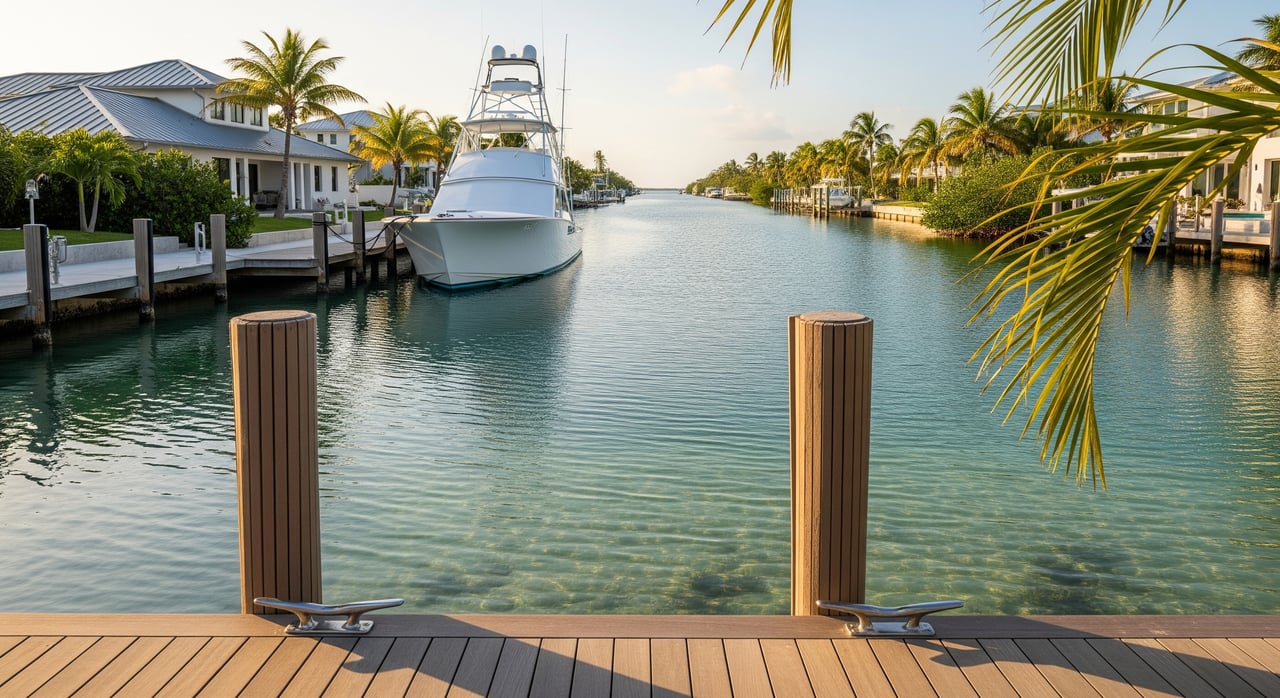
Thinking about a canal home in Islamorada and want to be sure your boat fits your life, not the other way around? In the Keys, canal type and water dynamics can make the difference between smooth weekend runs and frustrating tide-watching. You deserve clear guidance that matches real-world boating with the property you choose. In this guide, you’ll learn how canal types work, what flow, draft and turning basins really mean, and how to evaluate a 33070 property with confidence. Let’s dive in.
Canal types in Islamorada
Ocean-access canals
Ocean-access canals connect directly or through a short channel to open water like the Atlantic, Hawk Channel or Florida Bay. They typically enjoy stronger tidal exchange and deeper natural scour, which helps reduce long-term shoaling. You may experience more wind and wave exposure at the canal mouth, and currents can run faster near narrow exits. If you run larger or offshore-capable boats, this access can be a major plus.
Bay-access canals
Bay-access canals lead into protected bays or harbor-like waters. You get calmer day-to-day conditions and easier handling for small to mid-size boats. Flushing depends on how well the bay itself exchanges water and the canal’s geometry. Comfort is high, but some canals may see more sedimentation if exchange is limited.
Cut-through canals
Cut-throughs link two bodies of water. They can move water efficiently and create predictable tidal exchange. At the same time, these connectors often have narrow choke points where currents increase and shoaling can occur. Expect more attentive piloting during peak tides.
Dead-end basins and finger canals
Dead-end canals, common in subdivisions similar to Key Heights, terminate at docks without a second outlet. Flushing relies on tidal exchange at the canal mouth. These basins are great for privacy and mooring smaller boats, but they can experience slower currents, more sediment buildup and potential water-quality issues. Maintenance and turning room matter more here.
Flow: flushing and currents
Flow is the movement of water through a canal, driven mainly by the tide in the Florida Keys. The Upper Keys are microtidal, which means the tide range is small, yet still important for exchange. Stronger flushing usually means less sediment buildup and better water quality. Limited exchange can lead to shoaling, marine growth on structures and occasional algal mats.
What to look for:
- Mouth width and connection. A wider mouth and a direct link to a main channel usually flush better.
- Canal geometry. Long, narrow, dead-end canals tend to accumulate more sediment than open-through canals.
- Practical evidence. Ask about historical shoaling and how often residents have dredged. Find out whether an HOA or owners handle maintenance.
When docking, remember that narrow exits concentrate current. This can affect approach speed and cross-set. If you are new to a canal, make a few practice runs at slack or mild current before pushing the envelope.
Draft: depth and your boat
Draft is the vertical distance from the waterline to the lowest point of your hull or prop. In Islamorada, where tides do not swing large, low-tide depth is the decisive number. You want enough water under your keel at local low tide, plus a safety margin.
How to check depth:
- Compare charted or design depth with recent soundings or a survey. Many canals were dredged initially, then gradually shoal.
- Verify usable depth at local low tide. Use NOAA tide station data for Islamorada as your reference during due diligence.
- Look for obstructions. Rock ledges, submerged utilities and old debris can reduce usable depth even when charts look fine.
Practical guidance:
- Match your vessel’s draft to measured canal depth at low tide and add a margin. For small boats, a 6 to 12 inch buffer is common. Larger vessels may need more.
- Ask for dredging records and any depth guarantees from the HOA if available.
- Plan your passage windows during lower tides until you know the canal well.
Turning basins: space to maneuver
A turning basin is a widened area or the usable space at the end of a canal that lets you turn around and dock safely. Width, consistent depth and approach angle all matter.
Why it matters:
- Limited turning room sets a practical limit on boat length and beam you can manage without assistance.
- Tight turns increase collision and prop damage risk, especially in soft-bottom canals.
What to do:
- Measure or request dimensions for the canal mouth, mid-canal width and the basin at the head.
- Observe similar boats using the canal. If you plan a larger center console, ask a local captain or marina for practical limits based on experience.
Match boat to canal type
- Small shallow-draft boats. Skiffs, flats boats and small center consoles are well suited to narrower canals and dead-end basins, provided you have enough turning room and low-tide depth.
- Mid-size boats (about 24 to 35 feet). These thrive in ocean- or bay-access canals with steady depth and moderate turning room. Some larger dead-end basins work if they are maintained.
- Large vessels (over about 35 to 40 feet). These usually need ocean-access canals or marinas with maintained deep channels and formal turning basins. Many residential canals in Islamorada were not designed for larger yachts unless specifically upgraded.
Maintenance and responsibilities
Canals are living systems. Sediment moves, vegetation grows and storms reshape bottoms.
Key items:
- Dredging. Most residential canals need periodic dredging to maintain depth. Frequency depends on geometry, sediment sources and storm activity. Costs vary with volume and disposal method.
- Seawalls and shoreline. Repairs and replacements usually require permits and must minimize impacts to seagrass and neighbors.
- Docks and lifts. Local rules guide setbacks and designs to protect water quality and habitat. Expect standards for lift placement and shadow impacts.
Before you buy, ask who pays for maintenance. Responsibilities can fall to a private owner, an HOA or a local maintenance district. The answer affects long-term costs and resale value.
Permits, protections and timing
Work in or over the water is regulated to protect seagrass, mangroves and coral resources. Multiple agencies may be involved, including the U.S. Army Corps of Engineers, the Florida Department of Environmental Protection, the Florida Keys National Marine Sanctuary, the Florida Fish and Wildlife Conservation Commission, Monroe County and the Village of Islamorada.
What to expect:
- Dredging, seawall and dock work often requires permits across agencies. Reviews can take months and may include environmental assessments and mitigation.
- Mangrove trimming is tightly regulated. Unauthorized work can bring fines and require restoration.
- Plan ahead for any improvements. A well-prepared application and compliant design reduce delays.
Insurance, flood and title details
Waterfront exposure can influence flood and windstorm insurance. Proximity to open water, canal orientation and seawall conditions may factor into underwriting. Ask your insurer what they need to price coverage accurately, such as dock construction, hurricane mooring plans and lift specifications.
On title and easements, review deeds, plats and HOA documents for riparian rights, dredging obligations and maintenance assessments. Some canals are privately maintained and others are municipal. Understanding who pays for what helps you avoid surprises.
Buyer checklist for 33070 canal homes
Use this quick list during tours and inspections:
- Canal type and geometry. Identify ocean-access, bay-access, cut-through or dead-end. Note mouth width and connection to main channels.
- Depth and draft. Request recent soundings. Visit at low tide to observe usable depth and bottom type. Confirm minimum depth meets your draft with a margin.
- Turning room. Measure the canal head and watch similar boats maneuver. Ask for practical size limits.
- Docks and lifts. Inspect condition, elevation and permits. Confirm designs follow local standards that protect seagrass and water quality.
- Maintenance history. Request dredging dates, seawall repairs and any assessments or maintenance agreements.
- Permit records. Verify previous permits for seawalls, dredging and docks. Confirm compliance with county and state approvals.
- Environmental context. Ask about nearby seagrass beds or mangroves and whether any enforcement actions occurred.
- Insurance and lending. Check with preferred lenders and insurers about any requirements tied to canal type, flood zone or dock condition.
- Boating patterns. Observe traffic, no-wake enforcement and proximity to marinas and fuel.
Common mistakes to avoid
- Assuming charted depth equals today’s depth. Always confirm with recent soundings or a professional survey.
- Overlooking low-tide constraints. In the Keys, low-tide depth is the number that keeps you off the bottom.
- Ignoring turning space. A beautiful dock does not help if your boat cannot turn safely.
- Skipping permits. Unpermitted dock or seawall work can delay closings and limit insurance.
- Underestimating maintenance costs. Dredging and seawall work are periodic realities in many residential canals.
Your edge in a canal market
Every canal in Islamorada has a personality shaped by geometry, connection and care. The right property supports your boating life with predictable access, manageable maintenance and room to maneuver. With focused due diligence and local guidance, you can buy with confidence and enjoy the water the way you intend.
Ready to match your boat and lifestyle to the right canal home in 33070? Connect with The Florida Keys Sold Sisters for concierge-level guidance from agents who speak both real estate and maritime. Start Your Island Home Search — Schedule a Personal Consultation.
FAQs
What canal types are common in Islamorada 33070?
- Ocean-access, bay-access, cut-through connectors and dead-end finger canals are typical, each with different flushing, exposure and maintenance patterns.
How does tidal flow affect Keys canal maintenance?
- Better tidal flushing reduces sediment buildup and improves water quality, while limited exchange in dead-end basins can increase shoaling and maintenance needs.
How do I confirm a canal’s depth for my boat?
- Request recent soundings or a survey, compare to your boat’s draft at local low tide and add a safety margin to reduce grounding risk.
What is a turning basin and why does it matter?
- It is the space to turn and dock safely. Limited room sets practical limits on boat size and increases collision and prop-damage risk.
Who pays for dredging in Islamorada canals?
- Responsibility varies by property, HOA or local maintenance district, so review deed, plat and association documents before you buy.
Are there legal size limits for boats in residential canals?
- There is no universal legal limit, but depth, turning room and local rules set practical constraints, so observe neighboring boats and verify with the county.